Beyond Pizza and Pasta Your Guide to Eating in Italy
 By
 eating in Italy
Eating in Italy should feel like a pleasure, not an etiquette exam. Still, a few unfamiliar customs can leave first-time visitors puzzled: why pasta arrives without vegetables, why the check never appears, or why nobody orders cappuccino after dinner.
Understanding Italian food etiquette helps those moments make sense. Picture a neighborhood trattoria: warm bread on the table, the smell of garlic drifting from the kitchen, and conversations continuing between courses. The aim is to settle into that rhythm without worrying about getting everything perfect.
1. Treating Cappuccino as the Standard After-Dinner Coffee
Cappuccino usually belongs to breakfast, often alongside a pastry. After a meal, a small espresso—ordered simply as un caffè—is the more customary choice.
However, the famous “cappuccino rules Italy” advice gets exaggerated. There’s no nationwide 11 a.m. ban. Order one later if that’s what you enjoy; just understand that it isn’t the usual local habit. Claims that milk necessarily harms digestion after lunch shouldn’t be treated as medical fact.
2. Adding Cheese Before Tasting Seafood Pasta
A plate of spaghetti with clams often relies on briny juices, olive oil, and subtle seasoning. A generous covering of aged cheese can change that balance considerably.
Italian dining customs generally leave grated cheese off seafood pasta. But regional recipes and contemporary kitchens have exceptions, so “fish and dairy never mix” is too absolute.
The easy approach when eating in Italy is to taste the dish first. If cheese hasn’t arrived, ask whether it suits the preparation rather than assuming the server forgot it.
3. Assuming Every Course Is Compulsory
Italian meal courses organize the menu; they aren’t a challenge to complete. An antipasto is a starter, a primo might be pasta or risotto, and a secondo usually centers on meat or fish. A contorno is a separately ordered side.
Pasta normally has its own place in the meal rather than arriving as an accompaniment to a steak.
You can order a pasta dish and stop there, or choose a main and vegetables. Everyday meals are often much simpler than the full sequence suggests.
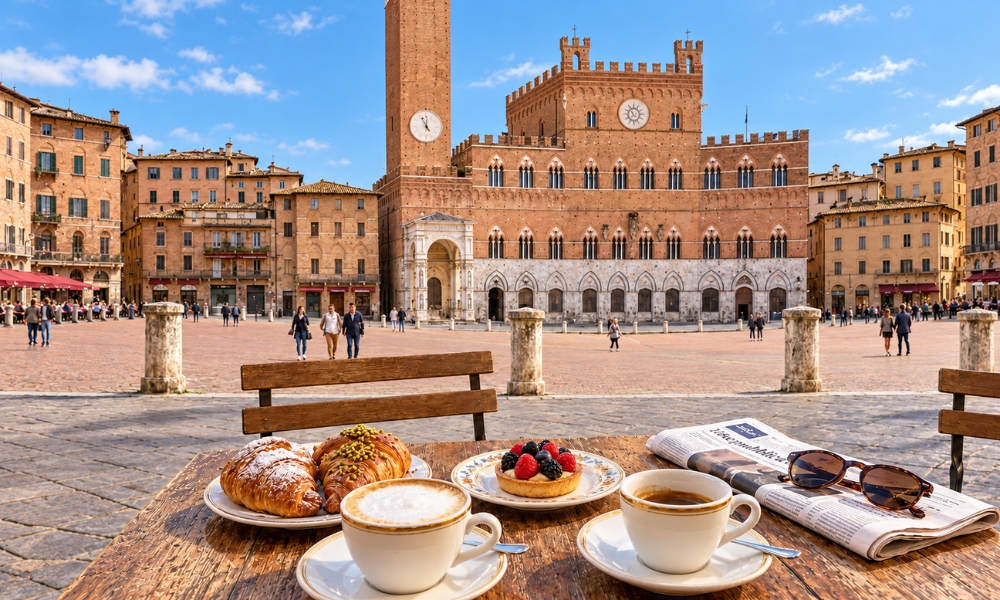 Italian food etiquette
4. Expecting Every Dish to Be Rebuilt
A restaurant may decline a substitution because its ingredients, preparation, or service setup don’t allow it. That isn’t automatically unfriendliness.
Before requesting several changes, consider choosing another dish. Asking what’s available often works better than trying to turn one recipe into something else.
Dietary needs are different. Explain allergies clearly and early, and ask about ingredients and cross-contact. Respecting Italian restaurant etiquette never requires ignoring a health concern or eating something unsuitable.
5. Cutting Spaghetti Into Tiny Pieces
For long pasta, gather a small amount and twirl it with a fork against the plate. Smaller forkfuls are easier than attempting to wind half the serving at once.
A spoon usually isn’t necessary, and cutting spaghetti isn’t the customary adult technique. Still, it’s a dining convention rather than a reason for embarrassment.
Children, people with limited dexterity, and anyone who needs an adaptation should eat comfortably. Learning local habits can enrich eating in Italy without turning dinner into a performance.
6. Expecting an Oil-and-Balsamic Dipping Bowl
Bread doesn’t automatically come with the dipping setup familiar from some Italian restaurants abroad. It may accompany the food rather than function as a separate appetizer. Bread isn’t reserved exclusively for that purpose, either. Follow what’s served, enjoy it alongside the meal, and avoid assuming every restaurant follows one national script.
7. Waiting Silently for the Check
At many sit-down restaurants, servers wait for diners to request the check. Leaving the table undisturbed gives people time to finish talking.
Say “Il conto, per favore” when ready. If there’s a train to catch, mention the time constraint before ordering and ask what the kitchen can prepare promptly.
Eating in Italy becomes easier when expectations are clear. Unhurried service can be enjoyable, but communicating a deadline is perfectly reasonable.
Quick Tips Before Sitting Down
- Check opening hours and reserve when needed.
- Read menu prices and listed cover charges.
- Mention allergies before choosing dishes.
- Ask about portion sizes and sharing.
- Choose drinks according to personal preference.
- Request the check when ready to leave.
Enjoy the Meal Without Overthinking It
The most useful Italy dining rules encourage attention: taste before adding extras, ask instead of assuming, and leave room to appreciate the setting. Eating in Italy offers enormous regional variety, so curiosity travels better than rigid taboos. A courteous question, a suitable order, and time to enjoy the food will usually matter far more than flawless fork technique.