Brazil’s Lagoon Desert You Can Hike Barefoot
 By
By 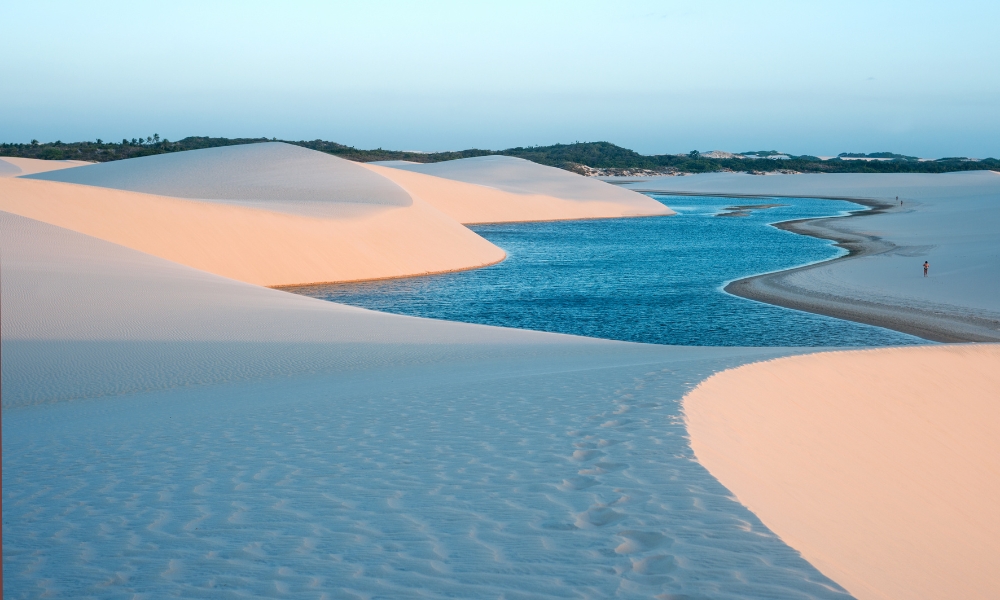 Lençóis Maranhenses
If you’ve ever pictured Brazil as rainforests, beaches, and big cities, Lençóis Maranhenses will throw your expectations off in the best way. This national park in northeastern Brazil looks like an endless desert at first glance—smooth pale dunes rolling in every direction. But once you’re actually there, you realize it’s not empty at all. It’s full of shimmering lagoons, hidden communities, and footpaths that make sense only when you’re walking them with someone who truly knows the land.
This is the kind of place where you stop relying on maps and start trusting the landscape.
A “Desert” That Keeps Changing Around You
Lençóis Maranhenses sits between lush vegetation on one side and the Atlantic Ocean on the other, which already tells you it’s not a typical desert. Strong coastal winds push sand inland, building a massive dune field that covers around 1,500 square kilometers. Some dunes rise up to 30 meters high, which means you’re not just strolling—you’re climbing, dropping, and working your legs the entire time.
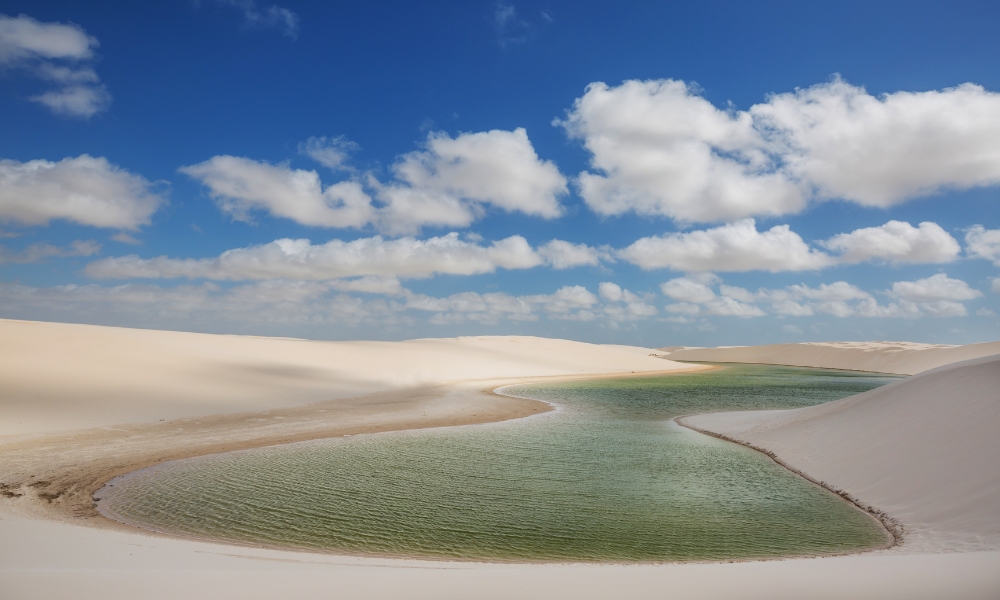
And yet, the most surprising part is what happens during the wet season, from January to June. Heavy rain fills natural basins between dunes, and because of an impermeable layer of sediment underneath, the water doesn’t drain away like you’d expect. Instead, it gathers into hundreds of freshwater lagoons—clear pools that look almost unreal against the sand.
So even though it looks like a desert, it behaves more like a living water world that just happens to be made of dunes.
Why Barefoot Hiking Feels Like the “Right” Way to Do It
When you’re trekking here, your feet are constantly negotiating new textures. Soft powdery sand makes you sink with every step, while other stretches feel almost rock-hard from the heat. You might start out in flip-flops, switch to water shoes, and then eventually realize that bare feet actually make the most sense.
You’ll notice muscles in your feet doing work you didn’t even know they were capable of. Every step makes you more aware of your pace, your balance, and how much effort the dunes demand.
And the strange part is that challenge becomes part of the reward.
Walking Through Lagoons
A trek across Lençóis is not a clean, dry hike. You’re going to cross lagoons—sometimes wading through waist-deep water while lifting your backpack over your head. You’ll pass pools that look like wide rivers and others shaped like perfect bowls of teal glass.
After an hour or so, taking a swim won’t feel optional. It’ll feel like survival in the most refreshing way possible. One minute you’re sweating through the climb, and the next you’re floating in cold water, staring up at dunes that look like they’ve been sculpted for a movie.
The Boom in Visitors—and Why It Matters
Lençóis Maranhenses earned UNESCO World Heritage status in 2024, and that global recognition has pushed it into a new spotlight. Visitor numbers have been rising fast—552,000 people in 2024, and by September the following year, the park had already crossed 580,000 visitors.
That popularity comes with pressure. The park is now one of Brazil’s most sought-after destinations for international travelers, ranking just behind major icons like Sugarloaf Mountain, Christ the Redeemer, and Iguazu Falls.
But increased attention also means more strain—illegal vehicle access, infrastructure stress, and even luxury real-estate speculation around the edges of the park. When you’re walking through a place this delicate, you can feel how easy it would be for it to be loved too aggressively.
Adventure Travel Brazil
Meeting the People Who Live Inside the Park
Here’s what many travelers don’t realize: more than 1,000 families live inside Lençóis Maranhenses. Your trek doesn’t just move through dunes—it connects you to real villages that exist like green pockets in the sand.
A typical multi-day hike might start at Lagoa Bonita near Barreirinhas and end in Atins, crossing roughly 36 km with overnight stays in small communities. After walking 15 km in a day, reaching one of these villages feels like relief in physical form—trees, shade, a simple shelter with hammocks, and a meal that hits differently after hours in the heat.
You’ll also experience moments that don’t feel “touristy” at all—like chatting with a family on their porch or holding a baby goat while laughing with strangers you’ll probably never meet again.
That quiet closeness is part of what makes walking here feel so worth it.
What to Expect on a Multi-Day Trek
Before you book it, it helps to know what the experience actually looks like:
- Long stretches of soft sand that slow you down fast
- Steep dunes that feel easy from above and brutal from below
- Lagoons you’ll wade through, not just admire
- Early wake-up calls, sometimes as early as 3:30 a.m.
- Simple accommodations in villages, often with limited electricity
- Big meals that suddenly become the highlight of your day
It’s not luxury travel. But it’s not roughing it for the sake of it either. It’s practical, grounded, and immersive.
A Place That Makes You Walk Differently
Lençóis Maranhenses isn’t the type of destination you “do” quickly. You feel it more than you photograph it. And when you’re crossing dunes barefoot, paying attention to tiny footprints and shifting sand, you start understanding why walking is the best way to experience it.
The lagoons may be what draws you in, but it’s the slow journey—step by step through a landscape that keeps changing—that stays with you.
Conclusion
If you’re looking for a destination that feels untouched without feeling unreachable, Lençóis Maranhenses delivers something rare: a desert that holds water, silence, and community all at once. And when you finally reach the end of your trek, you won’t just feel like you visited a place—you’ll feel like you moved through it the way it was meant to be experienced.